Disclosure: This post contains affiliate links. If you book through them, we may earn a small commission at no extra cost to you. See our full Affiliate Disclosure.
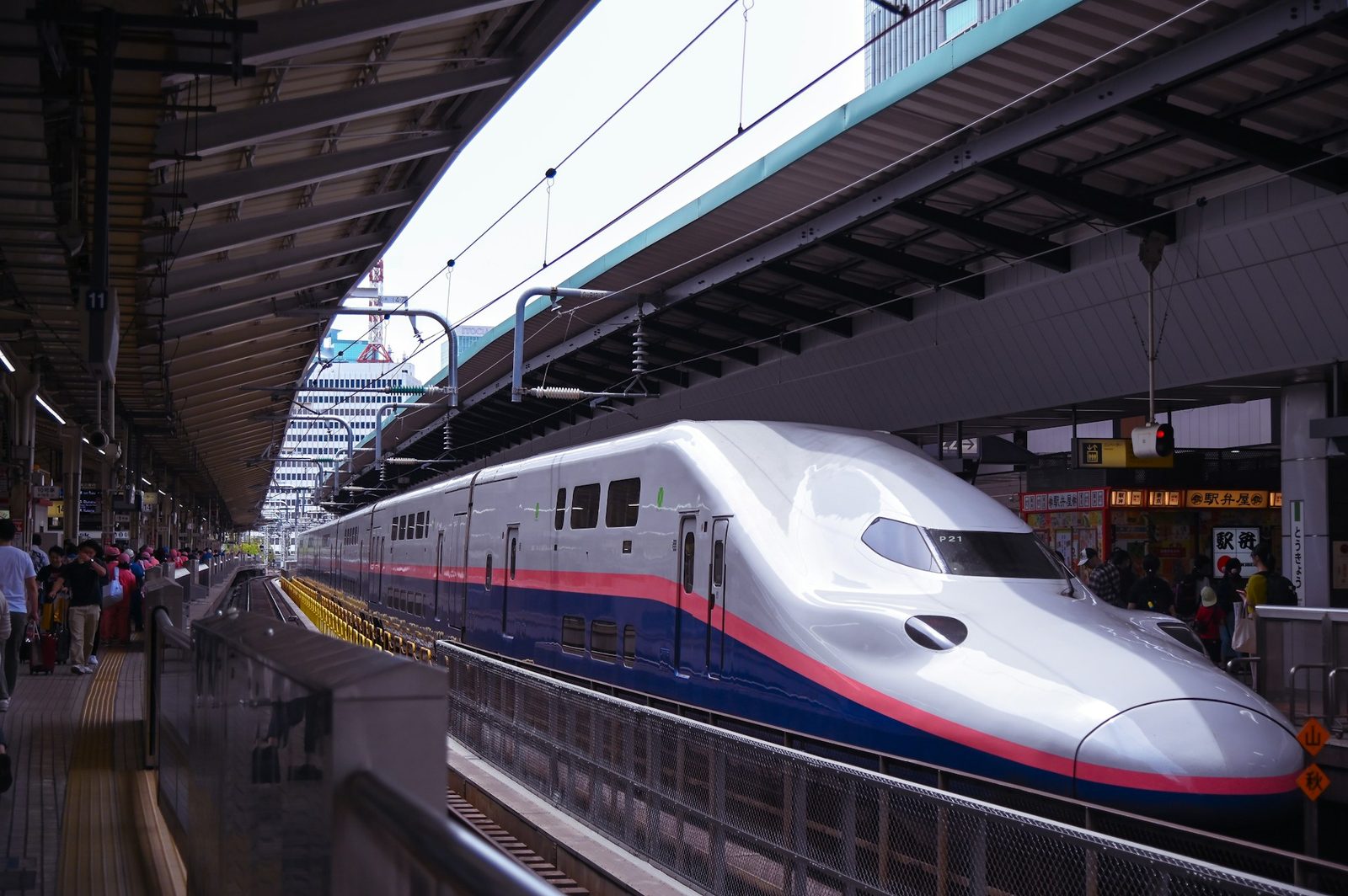
Here is the most expensive myth in Japan travel: “Just get the JR Pass, it always pays off.”
That was true once. It stopped being true in October 2023, when the price jumped about 70% — and most travel advice online still hasn’t caught up. I live in Tokyo and I keep meeting visitors who bought a ¥50,000 pass for a trip where individual tickets would have cost ¥29,000. That’s a ¥21,000 mistake — a very nice dinner for two in Ginza, gone.
This guide gives you the actual 2026 math, in five minutes, so you can decide with numbers instead of folklore. One thing changed on October 1, 2026: the price now depends on where you buy. Through an overseas JR-designated agency the 7-day ordinary pass is ¥53,000; on the official Japan Rail Pass website it was still listed at ¥50,000 when I checked on 4 October 2026. The math below gives both.
Who should skip this article
- You’re staying in one city. No pass of any kind — get a Suica/IC card on your phone for local trains and you’re done.
- You’ve already mapped a complex 5-city itinerary. You’re exactly who the pass is for; jump to the “when it wins” section.
The 2026 numbers
| Pass (nationwide, adult) | Official website (online) | Overseas JR-designated agency |
|---|---|---|
| 7-day Ordinary | ¥50,000 | ¥53,000 |
| 14-day Ordinary | ¥80,000 | ¥84,000 |
| 7-day Green (first class) | ¥70,000 | ¥74,000 |
Prices as listed on the official Japan Rail Pass site on 4 October 2026.
Rule of thumb for 2026: you need roughly 1,200 km of bullet-train travel in 7 days just to break even on the ordinary pass.
The math for the routes people actually take
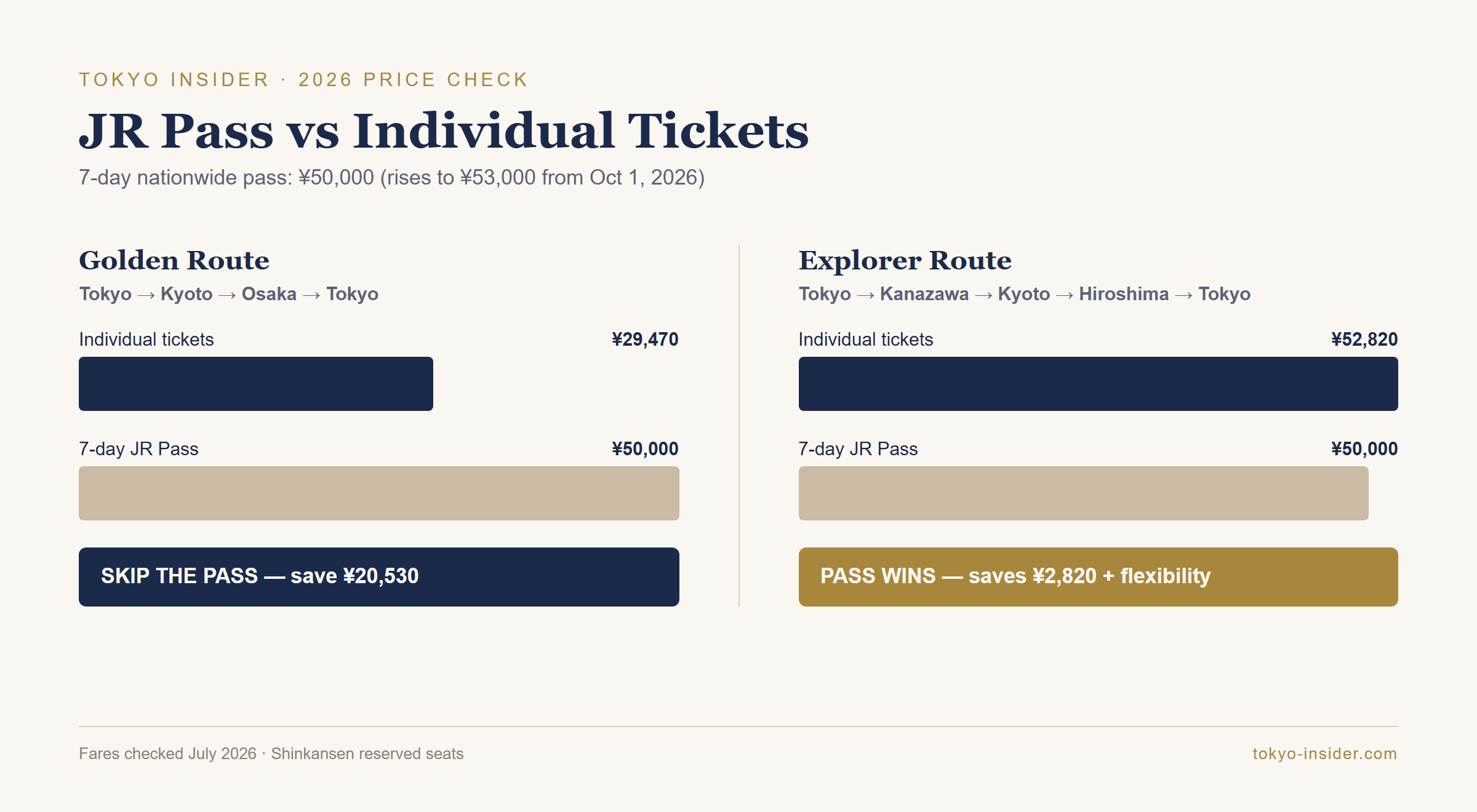
The Golden Route: Tokyo → Kyoto → Osaka → Tokyo
| Leg | Individual ticket |
|---|---|
| Tokyo → Kyoto (Shinkansen) | ¥14,170 |
| Kyoto → Osaka (local JR) | ¥580 |
| Osaka → Tokyo (Shinkansen) | ¥14,720 |
| Total | ¥29,470 |
Verdict: do NOT buy the pass. The 7-day pass loses you about ¥20,500 on this route at the official-site price, and about ¥23,500 through an agency. This is the single most common itinerary for first-time visitors, and it is exactly the one where the pass fails hardest.
The Explorer Route: Tokyo → Kanazawa → Kyoto → Hiroshima → Tokyo
| Leg | Individual ticket |
|---|---|
| Tokyo → Kanazawa | ¥14,380 |
| Kanazawa → Kyoto | ¥7,380 |
| Kyoto → Hiroshima | ¥11,620 |
| Hiroshima → Tokyo | ¥19,440 |
| Total | ¥52,820 |
Verdict: it depends where you buy. At the official-site price of ¥50,000 the pass wins — barely (it saves about ¥2,800), plus you get flexibility to hop on and off. At the agency price of ¥53,000 the pass costs about ¥180 more than the tickets, so you are paying for that flexibility rather than saving money. Add one more side trip (Nara, Himeji Castle, a day trip from Hiroshima to Miyajima) and the balance tips back toward the pass.
Quick self-test
Add up your bullet-train legs using Google Maps fare estimates (they’re accurate for Shinkansen). If the total clears the price you would pay for the pass (¥50,000 on the official site, ¥53,000 through an agency) within 7 days — buy the pass. If it doesn’t, don’t. There is no in-between magic; the pass is just a prepaid bundle of tickets.
What most visitors should buy instead
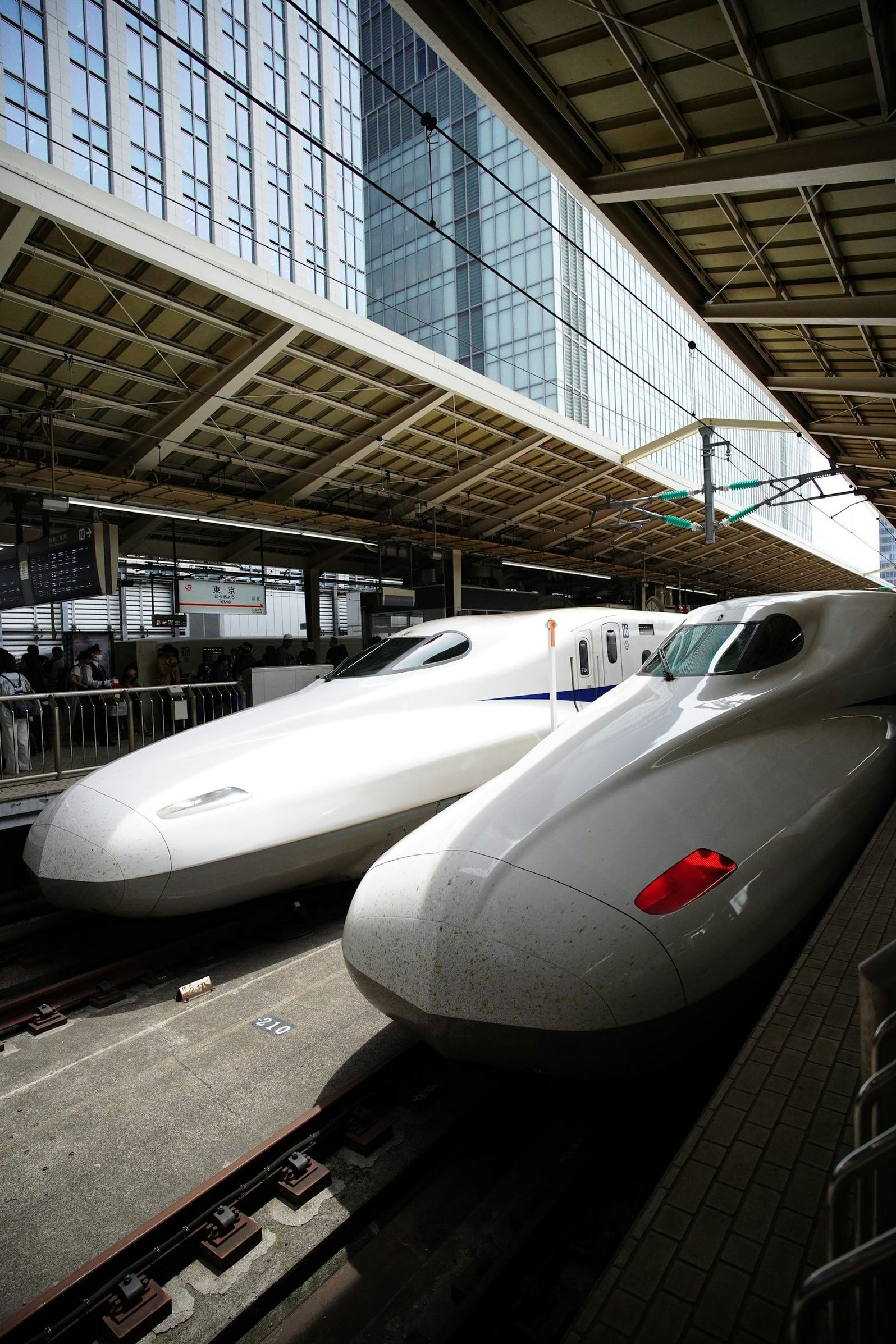
1. Individual Shinkansen tickets. Buy at any station machine (English menus, takes 3 minutes) or via the SmartEX app for the Tokyo–Kyoto–Osaka line. Reserved seats are worth the small premium in busy seasons. Which booking site you need depends on the direction you are heading — my guide to buying Shinkansen tickets in Tokyo covers that, plus the oversized-luggage rule.
2. Regional passes — the 2026 sweet spot. The national pass got expensive, but regional passes stayed reasonably priced and most of them are still genuine bargains:
- JR Kansai Area passes — Kyoto, Osaka, Nara, Kobe, Himeji at a fraction of the national price
- JR East passes (Tohoku / Nagano-Niigata) — for snow monkeys, onsen towns, and northern Japan
- Hokuriku Arch Pass — Tokyo to Osaka the scenic way via Kanazawa
These regional passes cover the “I want freedom to roam one region” feeling that made the old national pass so loved — without the ¥50,000-plus entry fee.
3. One IC card (Suica/PASMO) on your phone. For everything that isn’t a bullet train. Add it to Apple Wallet or Google Wallet before you land; top up with a credit card. Nobody buys paper tickets for local trains anymore.
If the pass IS right for you: buying it in 2026
The pass must be bought as a foreign tourist (temporary visitor status). You can buy from the official site or from overseas JR-designated agencies; resellers like Klook sell an exchange voucher you swap at the airport JR counter. Since October 1, 2026 the two prices differ: the official site listed ¥50,000 for the 7-day ordinary pass when I checked on 4 October 2026, against ¥53,000 through agencies. Japan’s national tourism organization described the official-site price as a limited-time offer when it announced the change, so compare both on the day you buy. A reseller can still make sense if you want the pass in the same app as your other bookings and prefer to pay in your home currency.
→ Check current JR Pass and regional pass prices on Klook

Ayako’s Local Tip
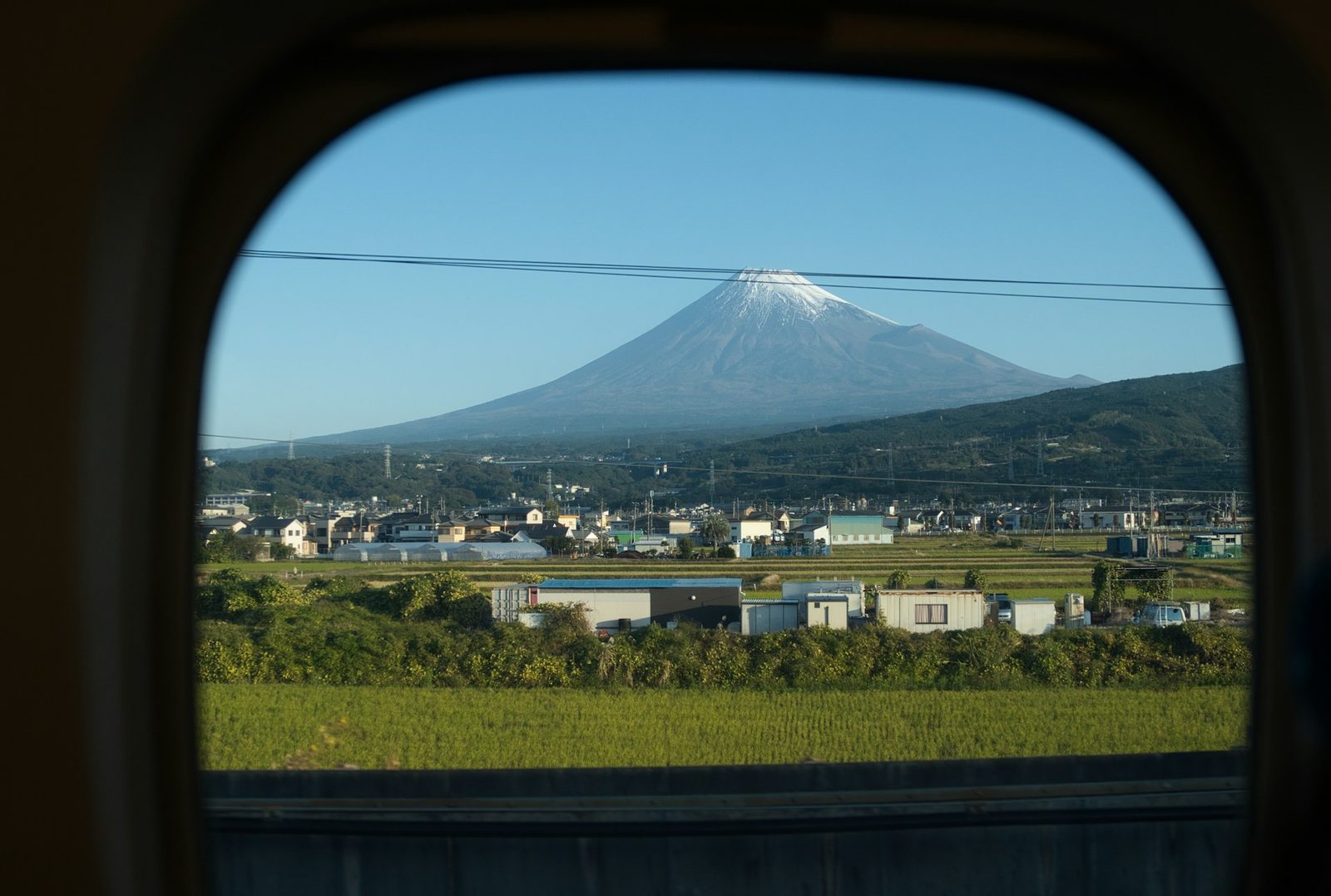
Riding from Tokyo toward Kyoto, book a window seat on the E row (right side). On a clear day you get this exact Mt. Fuji view around 40–50 minutes after departure — the photo above is what you’re fighting for.
Three things locals wish tourists knew
- The Nozomi rule changed the value math. The standard pass historically excluded the fastest Nozomi trains (surcharge applies). If you ride the Tokyo–Kyoto corridor, individual Nozomi tickets are faster than pass-covered Hikari trains — one more quiet advantage of skipping the pass on the Golden Route.
- Reserve luggage space if you have big suitcases. Oversized baggage on the Tokaido Shinkansen needs a reserved seat with luggage space — book it when you buy the ticket, whether or not you have a pass.
- Trains are punctual to the minute — plan tight, but not insane. A 7-minute transfer in a big station is realistic. A 4-minute one with suitcases is not.
Bottom line
Golden Route (Tokyo–Kyoto–Osaka): skip the pass, save ¥20,000, buy individual tickets. Multi-region trips clearing 1,200 km in a week: the pass still earns its keep — just compare the official-site price with the agency price before you buy. Either way, do the five-minute math above before anyone talks you into “it always pays off.”
Train fares checked July 2026. Pass prices checked on the official Japan Rail Pass site on 4 October 2026; confirm current prices when you book.
Staying mostly inside Tokyo rather than travelling between cities? The same five-minute math decides whether a subway pass pays off — see Tokyo Subway Ticket (24/48/72-Hour): Is It Worth It in 2026?.

Thanks for reading! I’m Ayako, a business owner in Ginza writing honest guides from inside Tokyo. More about me here.
Leave a Reply