Disclosure: This post contains affiliate links. If you book through them, we may earn a small commission at no extra cost to you. See our full Affiliate Disclosure.
If you have narrowed your Tokyo base down to two neighbourhoods, there is a good chance they are Ginza and Asakusa. They are the two names that keep coming up for a first trip, and they could hardly be more different: one is polished, quiet after dark and built around food and shopping; the other is old Tokyo, gathered around Senso-ji temple and the river.
The good news is that this is a low-risk choice. The two are 17 minutes apart on the Ginza Line, with no transfer, so whichever you pick, the other is an easy trip. The real question is what you want your money and your evenings to buy.
Quick answer: choose Ginza if you want the best food on your doorstep, calm evenings and a direct train to Haneda. Choose Asakusa if you want old-Tokyo character and a lower nightly rate, and you do not mind a slightly longer ride to the west side of the city.
Ginza vs Asakusa at a glance
| Ginza | Asakusa | |
|---|---|---|
| Typical nightly rate* | ¥15,000–90,000 | ¥8,000–18,000 |
| Feel | Polished, walkable, quiet at night | Old-Tokyo streets around Senso-ji, riverside walks |
| From Haneda | Direct from Higashi-Ginza, about 30 min | Direct to Asakusa (Kaminarimon), 37 min |
| From Narita | Keisei Access Express to Higashi-Ginza, no transfer | Skyliner to Ueno (41 min), then 5 min on the Ginza Line |
| To Shibuya | 17 min, Ginza Line | 32 min, Ginza Line end to end |
| To Shinjuku | 16 min, Marunouchi Line | Longer — usually with a transfer |
| Best for | Food-led trips, couples, jet-lagged sleepers, Haneda flyers | Budget-conscious travellers who still want atmosphere, longer stays |
*Rates are the typical ranges from my area-by-area guide to where to stay in Tokyo, collected on 26 August 2026. Prices move with the season, so treat them as a guide to the gap rather than a quote.
The price gap is the biggest difference
The most useful single fact about this choice is that the same business-hotel chain costs around 20–30% more in Ginza than in Asakusa or Ueno. Not a better room — the same kind of room, in a different neighbourhood.
Over a week, that gap adds up to a meaningful part of a trip budget. So instead of asking “which area is better?”, ask: is the extra I would pay for Ginza buying something I will actually use? For some travellers it clearly is. For others, Asakusa is simply the smarter spend.
What Ginza gives you
Ginza is my own neighbourhood, so weigh the bias. What you pay for here is mostly the hours either side of your sightseeing:
- Food on your doorstep. From department-store food halls to counter restaurants, eating well takes no planning. If you want a taste of it, start with our guide to Ginza’s depachika food halls.
- Quiet evenings. Ginza’s nightlife dresses up rather than gets loud, which matters more than people expect when jet lag wakes you at 4 a.m.
- A direct train to Haneda. Higashi-Ginza Station is on the Asakusa Line, about 30 minutes from Haneda with no transfer.
- A short hop to everything central. Tokyo Station is 5 minutes away, Shinjuku 16 and Shibuya 17, all without changing trains.
The trade-off is price, and a neighbourhood that is calm rather than lively at night.
→ Check rates: Mitsui Garden Ginza Premier · Tokyu Stay Ginza — or see where to stay in Ginza by budget and hotels near Ginza Station.
What Asakusa gives you
Asakusa is the answer I give most often to people watching their budget who still want a neighbourhood with character:
- Lower rates for comparable rooms. This is the main reason to choose it, and it is a good one.
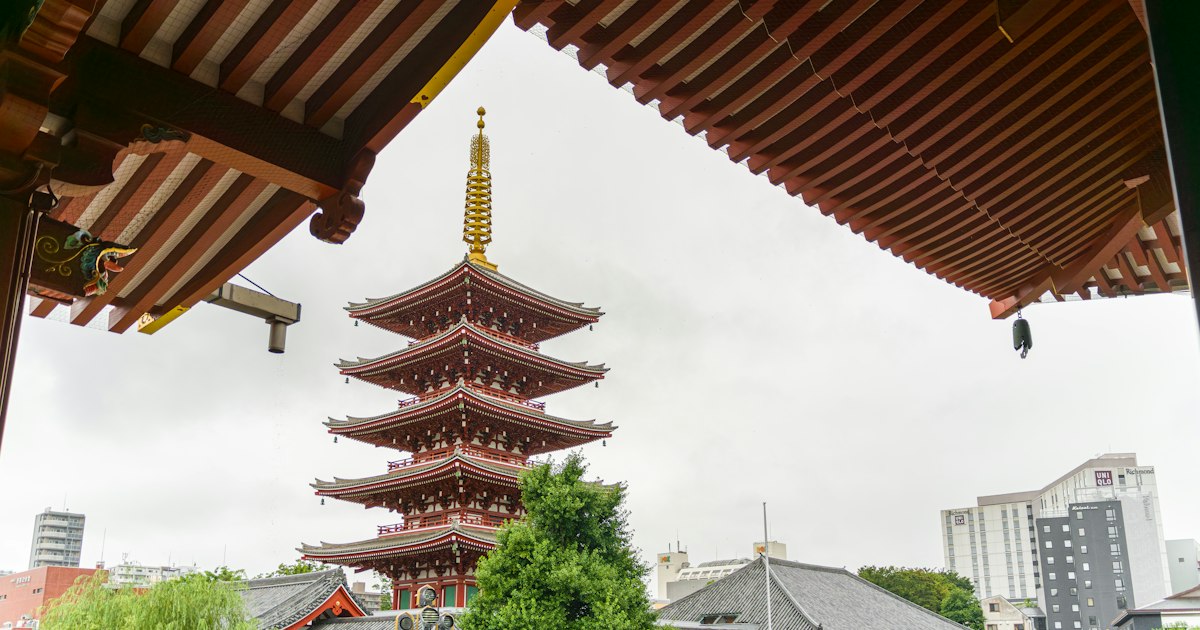
- Old-Tokyo atmosphere. The streets around Senso-ji temple and the walks along the river feel very different from the glass-and-stone centre.
- Easy airport access from both sides. Keikyu trains from Haneda run straight onto the Asakusa Line and reach Asakusa (Kaminarimon) in 37 minutes. From Narita, the Skyliner reaches Ueno in 41 minutes, and Ueno is 5 minutes from Asakusa.
- Ueno next door. The museums and the park in Ueno are one easy stop-over away, which makes Asakusa a comfortable base for families.
The trade-off is distance to the west side. Shibuya is 32 minutes away at the far end of the Ginza Line, and Shinjuku usually means a transfer. If most of your plans are in Shibuya, Harajuku or Shinjuku, you will feel that every day.
→ Check rates: The Gate Hotel Asakusa · Asakusa View Hotel · MIMARU SUITES (families)
Which one fits your trip?
| If this sounds like you… | Stay in… |
|---|---|
| Food is the point of the trip | Ginza |
| You are flying into Haneda late and want the shortest ride to bed | Ginza or Asakusa — both are direct |
| You are flying into Narita on the Skyliner | Asakusa (via Ueno) |
| Your budget is under about ¥15,000 a night | Asakusa |
| You are staying a week or more | Asakusa — the price gap grows with every night |
| Most of your plans are in Shibuya or Shinjuku | Ginza — or look at the west side instead |
| You want a quiet walk home at 10 p.m. | Ginza |
| Travelling with children | Asakusa, with Ueno next door |
If Shibuya or Shinjuku keeps coming up in your plans, the honest answer may be neither of these. Our Ginza vs Shinjuku vs Shibuya comparison covers that choice.
You can have both
Because the Ginza Line links them directly, you do not have to give up one to stay in the other.
- Staying in Ginza? Asakusa is a 17-minute ride for a morning at Senso-ji, and Ueno is on the same line on the way.
- Staying in Asakusa? Ginza is the same 17 minutes in the other direction for an afternoon of shopping and dinner. Our one perfect day in Ginza itinerary is built for exactly that kind of visit.
For how the rest of the city connects, see travel times between Tokyo’s main areas, and for the airport leg, Narita or Haneda to Tokyo.
Summary
- Distance: 17 minutes apart on the Ginza Line, no transfer.
- Price: the same hotel chain costs around 20–30% more in Ginza (rates collected August 2026).
- Ginza: food, quiet evenings, direct to Haneda, 16–17 minutes to Shinjuku and Shibuya.
- Asakusa: old-Tokyo character, lower rates, direct from Haneda in 37 minutes, Narita via the Skyliner and Ueno.
- Rule of thumb: choose the neighbourhood you want to walk around at 9 p.m., not the one closest to a sight you will visit once.
Travel times are from the timetables used in my travel-times and airport guides; the Haneda–Asakusa time is from Keikyu’s official access page, checked on 5 November 2026. Room rates were collected on 26 August 2026 and change with the season, so check current prices before you book.
Leave a Reply