Disclosure: This post contains affiliate links. If you book through them, we may earn a small commission at no extra cost to you. See our full Affiliate Disclosure.
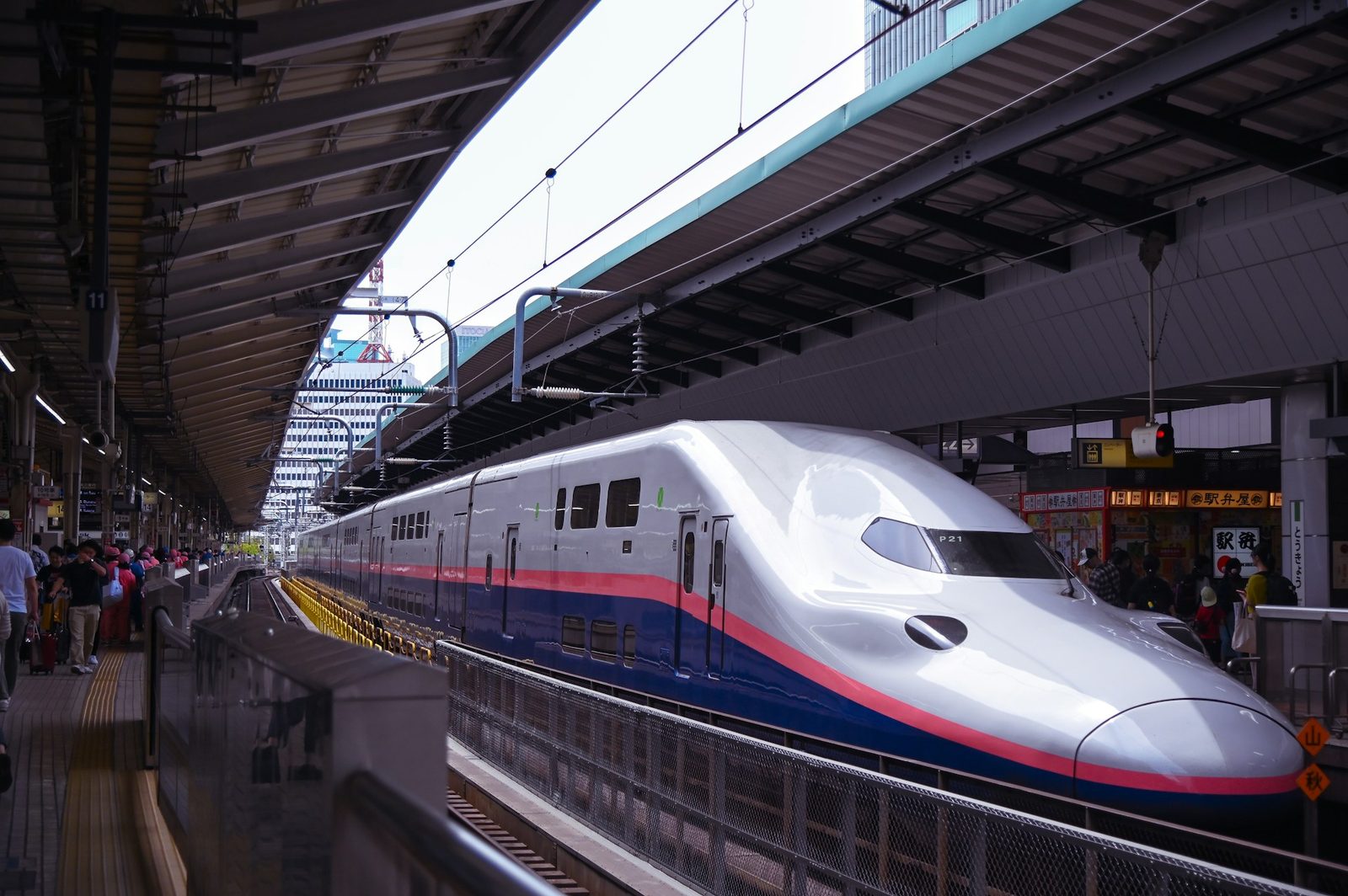
Here is the most expensive myth in Japan travel: “Just get the JR Pass, it always pays off.”
That was true once. It stopped being true in October 2023, when the price jumped about 70% — and most travel advice online still hasn’t caught up. I live in Tokyo and I keep meeting visitors who bought a ¥50,000 pass for a trip where individual tickets would have cost ¥29,000. That’s a ¥21,000 mistake — a very nice dinner for two in Ginza, gone.
This guide gives you the actual 2026 math, in five minutes, so you can decide with numbers instead of folklore. And one time-sensitive note: the pass price rises again on October 1, 2026 (7-day ordinary: ¥50,000 → ¥53,000), which makes the calculation even less forgiving.
Who should skip this article
- You’re staying in one city. No pass of any kind — get a Suica/IC card on your phone for local trains and you’re done.
- You’ve already mapped a complex 5-city itinerary. You’re exactly who the pass is for; jump to the “when it wins” section.
The 2026 numbers
| Pass (nationwide) | Until 2026-09-30 | From 2026-10-01 |
|---|---|---|
| 7-day Ordinary | ¥50,000 (≈$330) | ¥53,000 |
| 14-day Ordinary | ¥80,000 | higher (announced increase) |
| 7-day Green (first class) | ¥70,000 (≈$465) | higher (announced increase) |
Rule of thumb for 2026: you need roughly 1,200 km of bullet-train travel in 7 days just to break even on the ordinary pass.
The math for the routes people actually take
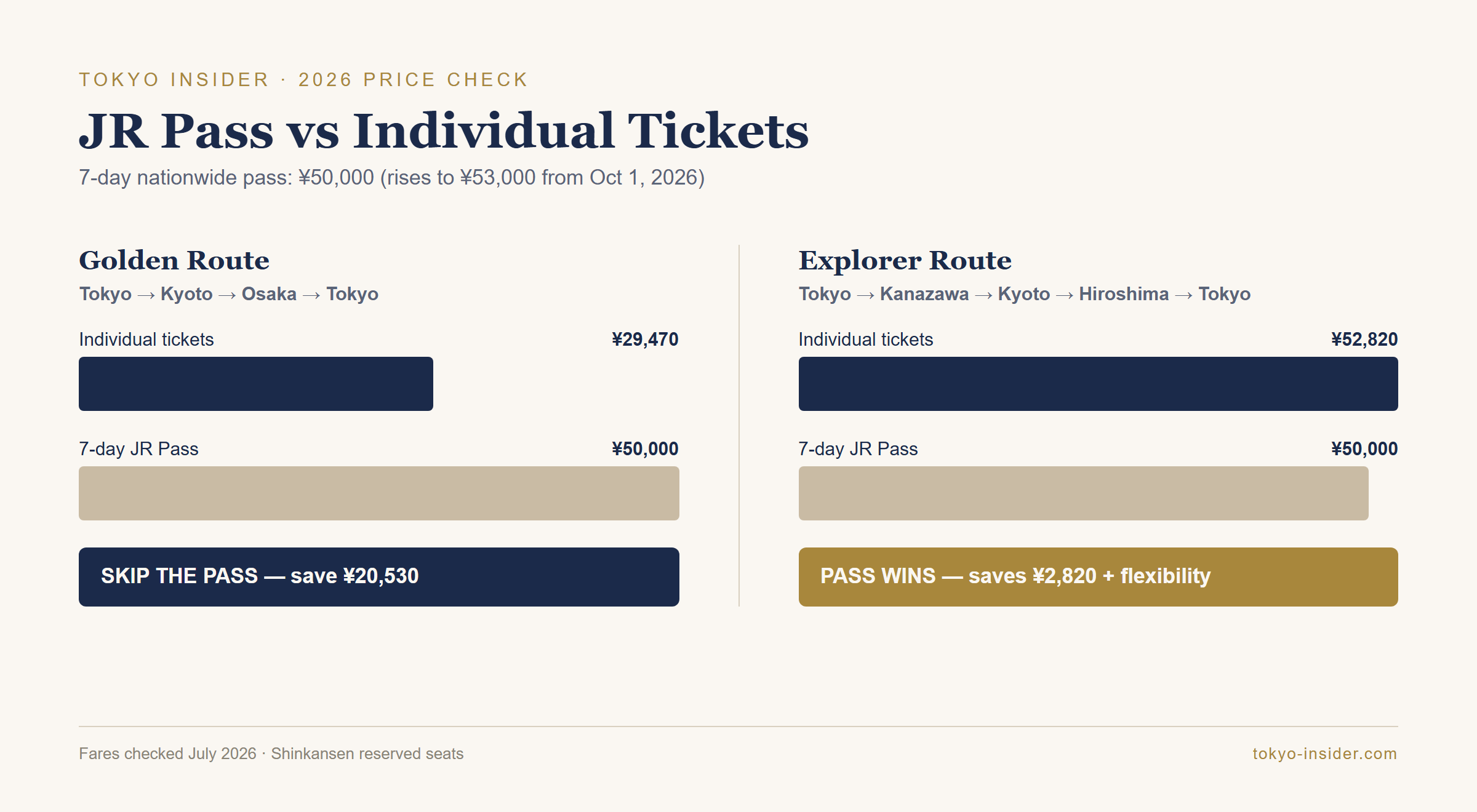
The Golden Route: Tokyo → Kyoto → Osaka → Tokyo
| Leg | Individual ticket |
|---|---|
| Tokyo → Kyoto (Shinkansen) | ¥14,170 |
| Kyoto → Osaka (local JR) | ¥580 |
| Osaka → Tokyo (Shinkansen) | ¥14,720 |
| Total | ¥29,470 |
Verdict: do NOT buy the pass. The 7-day pass loses you about ¥20,500 on this route. This is the single most common itinerary for first-time visitors, and it is exactly the one where the pass fails hardest.
The Explorer Route: Tokyo → Kanazawa → Kyoto → Hiroshima → Tokyo
| Leg | Individual ticket |
|---|---|
| Tokyo → Kanazawa | ¥14,380 |
| Kanazawa → Kyoto | ¥7,380 |
| Kyoto → Hiroshima | ¥11,620 |
| Hiroshima → Tokyo | ¥19,440 |
| Total | ¥52,820 |
Verdict: the pass wins — barely (saves about ¥2,800), plus you get flexibility to hop on and off. Add one more side trip (Nara, Himeji Castle, a day trip from Hiroshima to Miyajima) and the savings become real.
Quick self-test
Add up your bullet-train legs using Google Maps fare estimates (they’re accurate for Shinkansen). If the total clears ¥50,000 within 7 days — buy the pass. If it doesn’t, don’t. There is no in-between magic; the pass is just a prepaid bundle of tickets.
What most visitors should buy instead
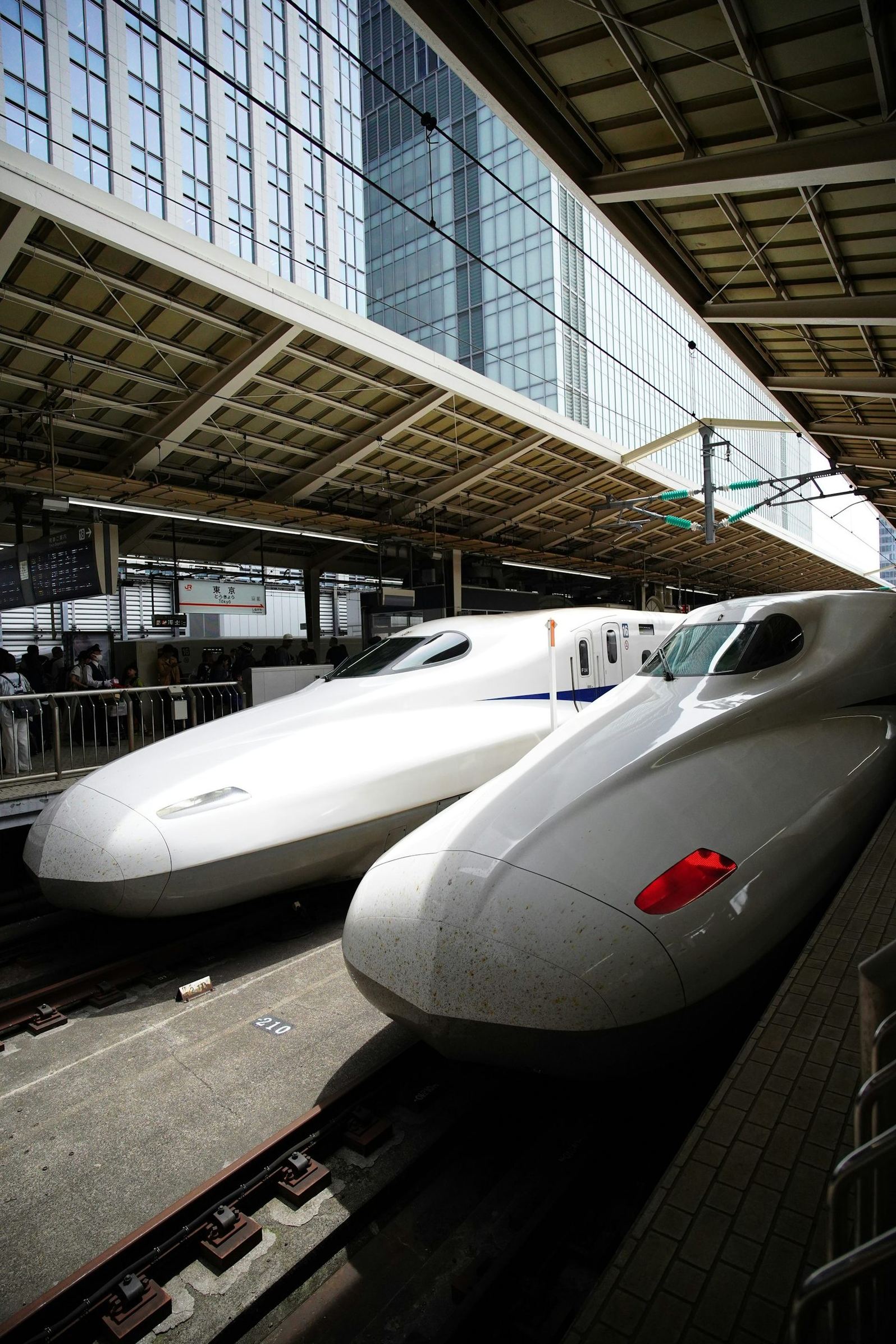
1. Individual Shinkansen tickets. Buy at any station machine (English menus, takes 3 minutes) or via the SmartEX app for the Tokyo–Kyoto–Osaka line. Reserved seats are worth the small premium in busy seasons.
2. Regional passes — the 2026 sweet spot. The national pass got expensive, but regional passes stayed reasonably priced and most of them are still genuine bargains:
- JR Kansai Area passes — Kyoto, Osaka, Nara, Kobe, Himeji at a fraction of the national price
- JR East passes (Tohoku / Nagano-Niigata) — for snow monkeys, onsen towns, and northern Japan
- Hokuriku Arch Pass — Tokyo to Osaka the scenic way via Kanazawa
These regional passes cover the “I want freedom to roam one region” feeling that made the old national pass so loved — without the ¥50,000 entry fee.
3. One IC card (Suica/PASMO) on your phone. For everything that isn’t a bullet train. Add it to Apple Wallet or Google Wallet before you land; top up with a credit card. Nobody buys paper tickets for local trains anymore.
If the pass IS right for you: buying it in 2026
The pass must be bought as a foreign tourist (temporary visitor status). You can buy from the official site or licensed resellers; resellers like Klook sell an exchange voucher you swap at the airport JR counter, and the price is essentially the same — the practical advantage is keeping it in the same app as your other bookings and paying in your home currency. If your trip starts on or after October 1, 2026, buying before the price change (passes can typically be exchanged within 3 months of purchase) is a legitimate way to lock in the lower price — check the current exchange-validity terms when you order.
→ Check current JR Pass and regional pass prices on Klook

Ayako’s Local Tip
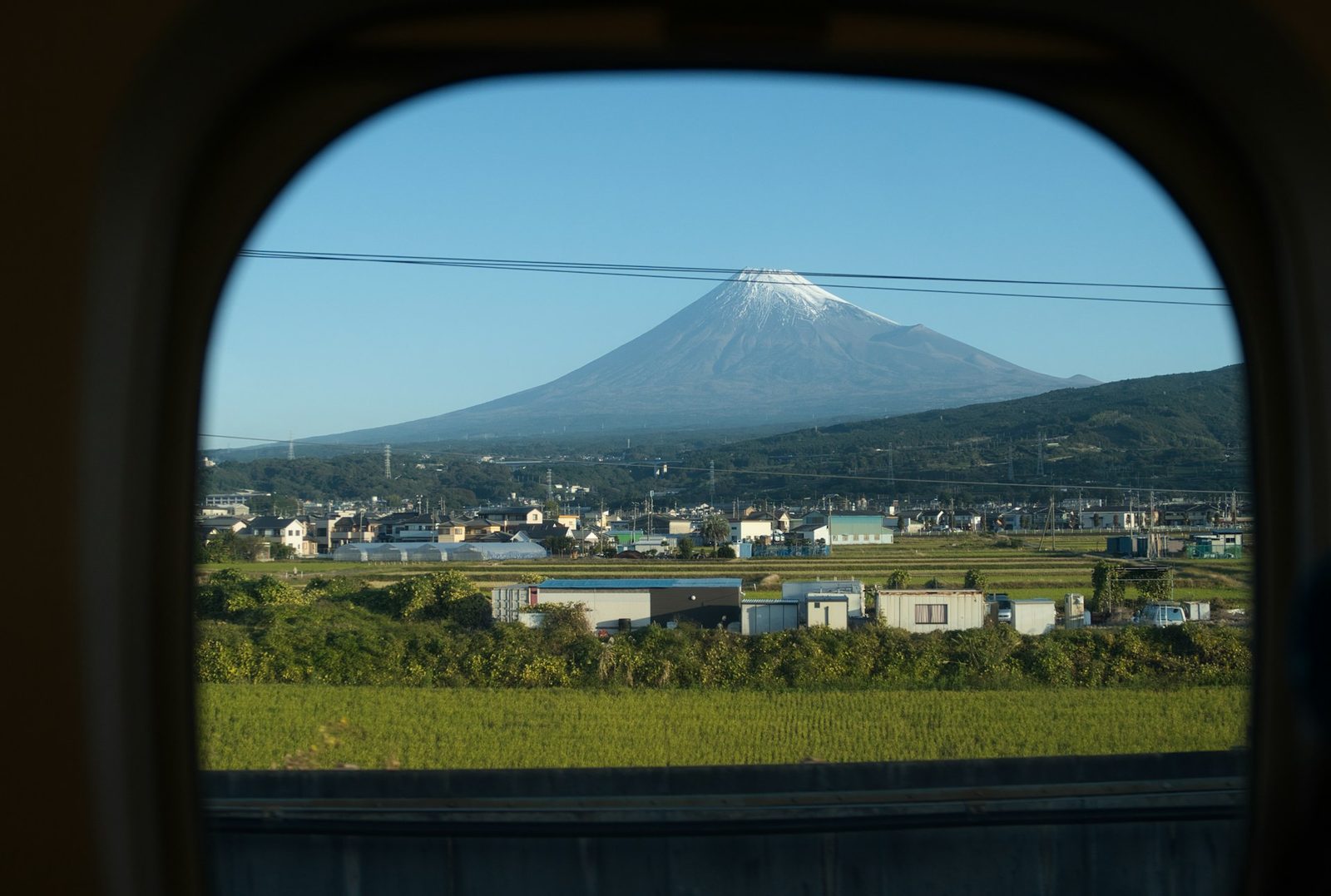
Riding from Tokyo toward Kyoto, book a window seat on the E row (right side). On a clear day you get this exact Mt. Fuji view around 40–50 minutes after departure — the photo above is what you’re fighting for.
Three things locals wish tourists knew
- The Nozomi rule changed the value math. The standard pass historically excluded the fastest Nozomi trains (surcharge applies). If you ride the Tokyo–Kyoto corridor, individual Nozomi tickets are faster than pass-covered Hikari trains — one more quiet advantage of skipping the pass on the Golden Route.
- Reserve luggage space if you have big suitcases. Oversized baggage on the Tokaido Shinkansen needs a reserved seat with luggage space — book it when you buy the ticket, whether or not you have a pass.
- Trains are punctual to the minute — plan tight, but not insane. A 7-minute transfer in a big station is realistic. A 4-minute one with suitcases is not.
Bottom line
Golden Route (Tokyo–Kyoto–Osaka): skip the pass, save ¥20,000, buy individual tickets. Multi-region trips clearing 1,200 km in a week: the pass still earns its keep — and buy it before the October 2026 price rise if your dates allow. Either way, do the five-minute math above before anyone talks you into “it always pays off.”
Fares and pass prices checked July 2026. The October 2026 increase figures are as announced; confirm current prices when you book.
Staying mostly inside Tokyo rather than travelling between cities? The same five-minute math decides whether a subway pass pays off — see Tokyo Subway Ticket (24/48/72-Hour): Is It Worth It in 2026?.

Thanks for reading! I’m Ayako, a business owner in Ginza writing honest guides from inside Tokyo. More about me here.
Leave a Reply