Disclosure: This post contains affiliate links. If you book through them, we may earn a small commission at no extra cost to you. See our full Affiliate Disclosure.
Let me clear something up first: Japanese kakigori is not a snow cone.
What Ginza’s dessert artisans do with ice is closer to patisserie — blocks of slowly-frozen ice shaved into ribbons so fine they melt like fresh snow, layered with house-made syrups, seasonal fruit, tea, and cream. It arrives as a tower, often bigger than your head, and disappears lighter than air.
My salons are in Ginza, and in summer, kakigori is how this neighborhood treats itself. These are the five shops I actually send friends and customers to — each one a completely different school of shaved ice.
First, the ground rules (learn from tourists’ mistakes)
- It’s a dessert course, not a snack. Expect ¥1,500–2,500 per bowl, and worth every yen — this is the same craft level as Ginza’s pastry counters.
- Eat it the moment it lands. Kakigori waits for no photo shoot. Take your picture in the first ten seconds, then commit.
- Queues are part of the culture. Peak season (July–August) and peak hours (14:00–16:00) can mean an hour’s wait at the famous spots. Go at opening on a weekday, or check whether the shop uses online waitlists.
- One bowl per person is normal. Sharing one between two is understandable for first-timers — but you’ll regret it.
The five shops
1. Ginza no Ginger — for flavors you can’t get anywhere else
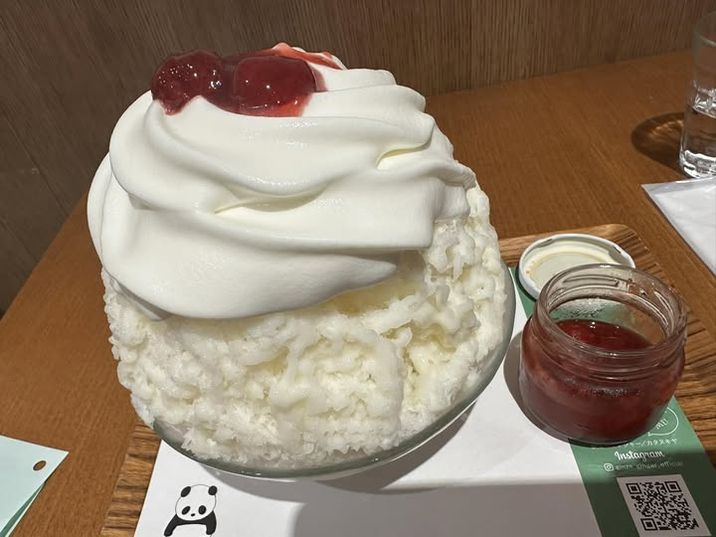
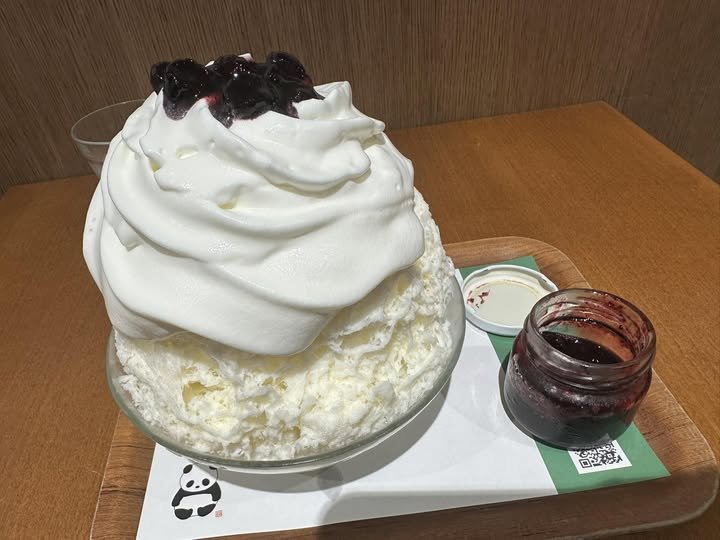
A specialty shop built entirely around ginger: house-made syrups and confitures of ginger with strawberry, yuzu citrus, lemon and more. Their kakigori arrives as a snow mountain wrapped in a cloud of condensed-milk espuma, with a jar of confiture on the side so you control every spoonful. The gentle warming kick of ginger underneath the cold is a contradiction that somehow works perfectly.
What I actually order: the camembert rare-cheese with strawberry and condensed-milk espuma — and on the last visit, camembert sauce with blueberry–Earl Grey confiture. Cheese, tea, fruit and ice in one bowl, and it works.
Good for: adventurous palates, ginger lovers, anyone who finds most desserts too sweet.
2. Vinefru Ginza — the patisserie school
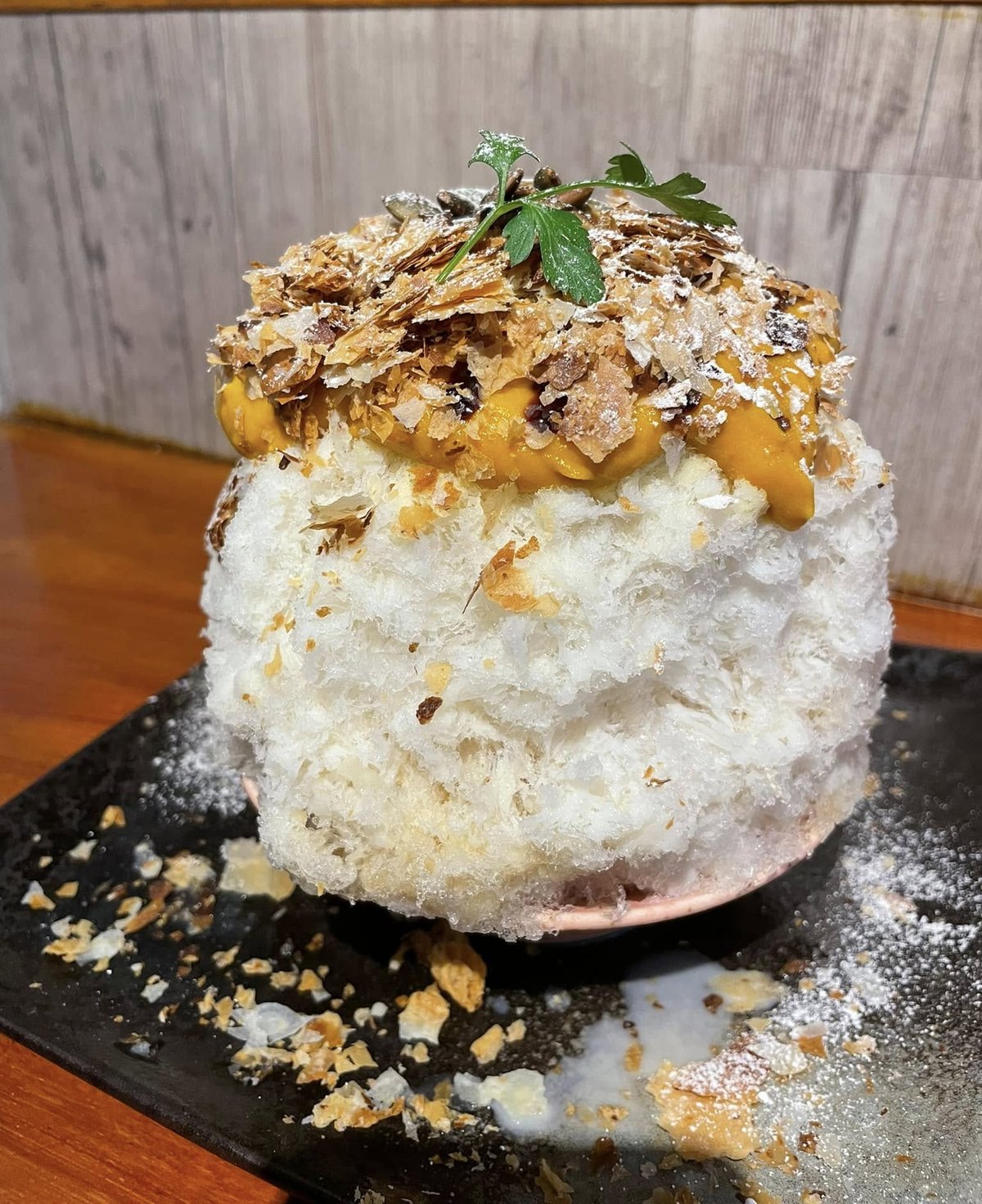
Vinefru’s signature is espuma — an airy foam poured over the ice like a cloud over a mountain. The strawberry-and-cheese espuma bowl is the one everyone comes for: part shaved ice, part deconstructed cheesecake. But their seasonal creations are where the patisserie thinking really shows — my last bowl came crowned with roasted cream and a crust of pie crumble, closer to a French dessert than anything you’d call “shaved ice.”
Good for: sweet tooths, cafe-hoppers, first kakigori ever.
3. Yukimido — the fruit-forward one
Snow-soft ice piled with fruit — bowls here lean into seasonal produce, generously. Come in peach or melon season and the fruit does the talking over the ice.
Good for: fruit lovers, lighter appetites, seasonal-menu chasers.
4. Ginza Fukurokuju — the Japanese tea house experience
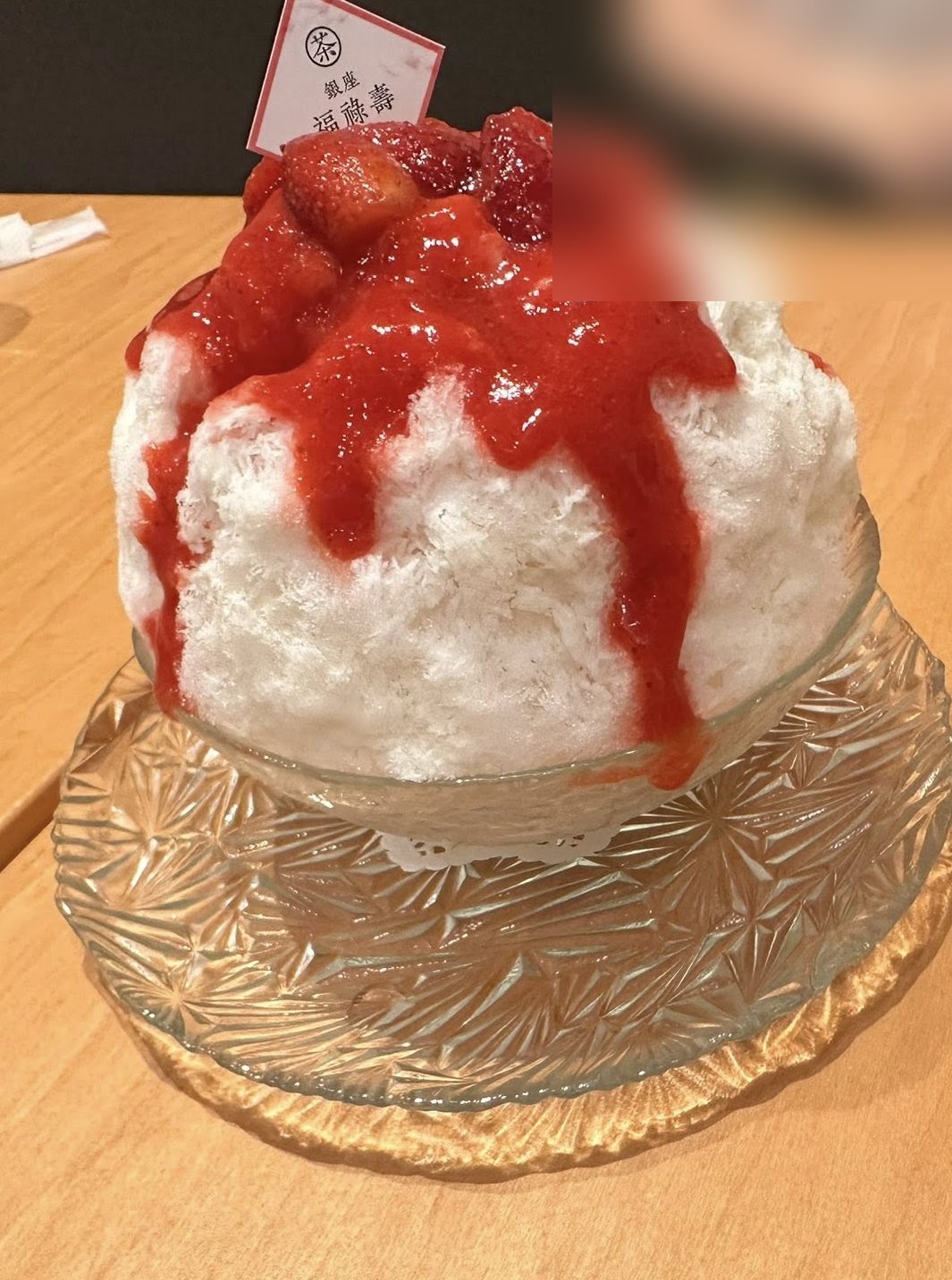
A charming Japanese tea cafe where kakigori shares the menu with quality Japanese teas and wagashi, served with calm, unhurried hospitality. Presentation is pure old-school elegance: a cut-glass bowl, a tiny paper shop flag planted on top, seasonal fruit piled generously over snow-white ice.
What I actually order: the strawberry — whole berries heaped over the ice with a bright strawberry sauce poured down the sides. Their melon and peach bowls are the other summer stars.
Good for: a quieter pace, tea drinkers, anyone escaping the Chuo-dori crowds.
5. HIGASHIYA GINZA — the refined classic
Tokyo’s most sophisticated modern tea salon, where summer kakigori is shaved on an old-fashioned machine and served with the same precision as their famous wagashi. Expect classical styles — matcha kintoki with red beans, seasonal citrus, honey plum — in a serene room above Chuo-dori. The most “grown-up” kakigori in Ginza.
Good for: design lovers, tea ceremony curiosity, a calm hour away from the heat.

Ayako’s Local Tip
Kakigori queues in Ginza peak between 14:00 and 16:00 — exactly when the summer heat does. Go at opening time on a weekday instead, treat it as your first stop rather than an afternoon break, and you’ll walk straight in at almost any shop on this list.
Make a day of it
All five shops sit within a 10-minute walk of each other in central Ginza. Pair your kakigori stop with the weekend pedestrian paradise on Chuo-dori, and if you’re staying nearby, my guide to Ginza hotels by budget covers the neighborhood in detail. Comparing live rates before you book? Check current Ginza hotel rates on Agoda.
Want to turn the stop into a half-day out? teamLab Planets in nearby Toyosu is one of the most photogenic experiences in Tokyo and pairs naturally with an afternoon of dessert-hopping. Check current teamLab Planets ticket availability.
Bottom line
Kakigori is the best ¥2,000 you’ll spend on a Tokyo summer afternoon — and Ginza quietly has one of the city’s strongest lineups. Vinefru for your first bowl, Ginza no Ginger for a flavor you’ll talk about for years, HIGASHIYA when you want it elegant.
Staying over to fit in a second bowl tomorrow? Compare Ginza hotel rates on Agoda.
Menus and prices are seasonal and change often; several shops serve kakigori only in the warmer months. Check the shop’s social media on the day you go.

Thanks for reading! I’m Ayako, a business owner in Ginza writing honest guides from inside Tokyo. More about me here.
Leave a Reply