Disclosure: This post contains affiliate links. If you book through them, we may earn a small commission at no extra cost to you. See our full Affiliate Disclosure.
I run nail salons in Ginza, so I’ll admit my bias upfront: I think Japanese gel nails are the best in the world. But I also talk to visitors who walked into a random salon, couldn’t read the menu, paid more than they expected, and left confused about why their “quick manicure” took two hours.
This guide is what I’d tell a friend visiting Tokyo: what makes Japanese gel work genuinely different, what it actually costs (checked August 2026), how to book when almost every reservation site is Japanese-only, and what will happen at your appointment — hour by hour, no surprises.
Why Japanese gel nails are different
Three things set the Tokyo nail scene apart from most of the world:
- Licensed, examination-tested technicians. Japan has a national nailist certification system with multiple exam levels. The senior technicians at good salons have passed practical examinations that take years of training — it shows in the finish work, especially around the cuticle line.
- Gel-first culture. While much of the world still runs on acrylics, Japan went almost entirely to soft gel a decade ago. The result is a deep bench of gel-specific technique: thin, glossy, natural-looking layers that last three to four weeks without lifting.
- Detail work as a default. Hand-painted art, tiny parts placed with tweezers, subtle color gradations — the level of detail that costs extra almost everywhere else is simply how Tokyo salons work.
Two words worth knowing: para-gel and fill-in
If you research Japanese salons you’ll see two terms over and over. Para-gel (パラジェル) is a base gel applied without sanding down the surface of your natural nail — the salon skips the filing step that thins nails over time. Fill-in (フィルイン) means that at your next appointment, instead of soaking everything off with acetone, the technician removes only the color layer and keeps the healthy base layer in place.
Together they’re the reason Japanese regulars can wear gel continuously for years without their natural nails turning papery. One honest note from inside the industry: fill-in is a genuinely difficult technique, and not every salon that lists it does it well. Salons that specialize in it will say so prominently — that’s the signal to look for.
What gel nails cost in Tokyo (checked August 2026)
- One-color gel: ¥4,500–8,000 at most salons. Budget chains advertise from around ¥4,000; Ginza-level salons run ¥6,000–8,000.
- Design courses (art, parts, gradation): ¥8,000–15,000. Many salons sell flat-rate design menus — you pick from a sample book and the price is fixed, which is very tourist-friendly.
- Elaborate custom art: ¥15,000–23,000 and up.
- Removal (off): ¥2,000–4,000 if you arrive wearing another salon’s gel; often discounted or free when combined with a new set.
Prices in Ginza sit at the upper-middle of those ranges, and in my honest opinion the district earns it: this is where salons compete on finish quality rather than speed.
The booking problem (and how to solve it)
Here’s the part nobody warns you about: Japan’s dominant salon booking platforms are Japanese-only. The big reservation sites have no English interface, and most salons don’t answer international phone calls.
Your realistic options, from easiest to most adventurous:
- Book a tourist-friendly salon through an activity platform. Some Tokyo salons now list on international booking platforms with instant confirmation in English.
- Instagram DM. Tokyo salons live on Instagram, and many respond to short, polite English messages with a date, time and menu screenshot. Reply speed varies from minutes to days, so start early.
- A salon’s own web booking page. Independent salons often run their own reservation pages, and some have English-language versions — look for an “EN” or language toggle. These are usually the same real-time systems locals use.
- Your hotel concierge. The classic solution still works, especially in Ginza where concierges book salons for guests weekly.
Walk-ins are the least reliable route: good salons run on appointments, and a technician with an open hour is the exception, not the rule.
What to expect at your appointment
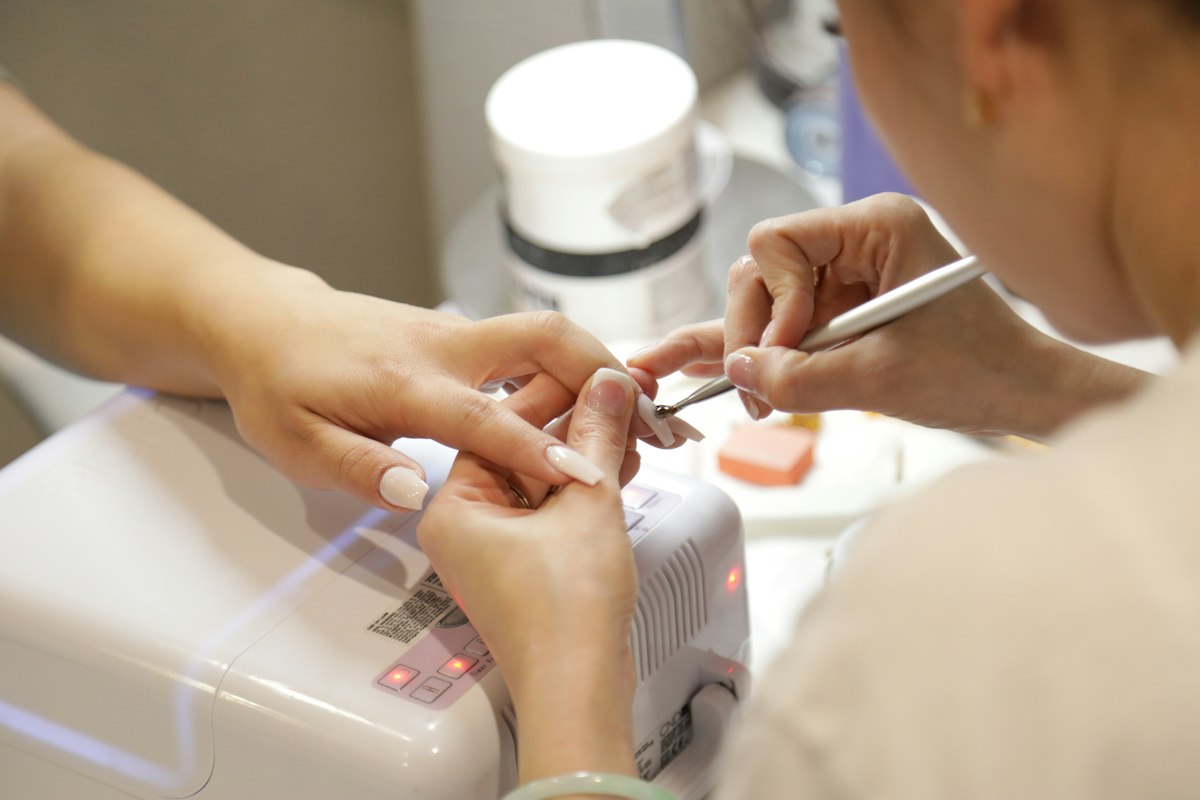
- Plan for 90–150 minutes. A gel set with removal and art is a long, careful process here — this is normal, not the salon being slow.
- Counseling comes first. Expect questions (or a translation app pointed at you) about nail health, length and daily life. Bring reference photos — screenshots are the universal language of nail salons, and every technician in Tokyo is fluent in them.
- Sample books are your friend. Flat-rate menus come with physical sample tips; pointing works perfectly even with zero shared language.
- Payment: most central-Tokyo salons take cards and QR payments, but a minority are still cash-only — worth checking when you book. And remember the golden rule of Japanese services: no tipping, ever. It will be politely refused.
- Arrive on time. Bookings run back-to-back; ten minutes late can genuinely shorten your service, and no-shows may be charged at some salons.
Who this is NOT for
Honesty corner: skip the Tokyo salon experience if you need a 30-minute express manicure between trains — the craft-first pace here will frustrate you. Same if you want long American-style sculpted acrylics; they exist in Tokyo but they’re a niche, and the specialists are harder to find. And if you’re visiting for under 48 hours, I’d spend the two hours on the city instead — gel this good deserves to be enjoyed longer than a layover.

Ayako’s Local Tip
Book a weekday morning slot if you can — salons are calmest then, and you’ll get the most unhurried version of the counseling and finish work. My favorite combination for visitors: morning nails in Ginza, then the rest of my one perfect day in Ginza itinerary while the topcoat is still flawless. Fresh nails, department-store food halls, evening lights — that’s a very good Tokyo day.
Quick answers (FAQ)
Do Tokyo nail salons speak English?
Fully bilingual salons are a minority, but reference photos, sample books and translation apps close the gap — communication is rarely the reason a visit goes wrong.
How far ahead should I book?
For a specific salon, three to seven days. Popular weekend slots in Ginza fill a week or more ahead.
How long do Japanese gel nails last?
Three to four weeks is standard. With para-gel and fill-in maintenance, regulars here wear gel year-round without damage.
Is it worth doing on a short trip?
If you have two hours and love nails, yes — it’s one of the most affordable world-class craft experiences in Tokyo, and your manicure flies home with you.
Bottom line
Tokyo gel nails are a craft experience: licensed hands, gel-first technique, and detail work that most of the world charges luxury prices for. Budget ¥8,000–15,000 for a design set in a good salon, book a few days ahead by app, DM or concierge, bring screenshots, don’t tip, and enjoy owning the best souvenir that fits in zero luggage space. Staying in the neighborhood makes it easy — my Ginza hotel guide covers every budget, and if you need data for all that Instagram booking, my Japan eSIM comparison has you covered.

Thanks for reading! I’m Ayako, a business owner in Ginza writing honest guides from inside Tokyo. More about me here.
Leave a Reply